What Rear End Housing Do I Need for Pro Mod Drag Racing?
It All Begins Here
If you're building a Pro Mod car or upgrading an existing setup, choosing the right rear end housing is one of the most critical decisions you'll make. The wrong housing can't handle the load, and in Pro Mod that means catastrophic failure at the worst possible moment. This guide breaks down exactly what to look for.
Why the Rear End Housing Matters in Pro Mod
Pro Mod is one of the most demanding classes in drag racing. Whether you're running a blown, nitrous, or turbo application, you're putting anywhere from 2,500 to over 6,000 horsepower through the drivetrain in a matter of seconds. The rear end housing is the structural backbone that holds everything together under that load — the axle tubes, the gear, the brakes, and the suspension pickup points all live there. If it flexes, cracks, or fails, your race is over and your car could be seriously damaged.
A housing that was built for a street car or a lower horsepower bracket car simply isn't engineered for what Pro Mod throws at it. You need something purpose built.
Material — Why Chromoly is the Only Choice for Pro Mod
The first thing to look at is material. Rear end housings are typically built from mild steel or 4130 chromoly. For Pro Mod applications chromoly is the only material worth considering.
4130 chromoly is a chrome-molybdenum alloy steel that offers significantly higher tensile strength than mild steel at a lighter weight. In a class where every pound matters and the forces involved are extreme, that combination is exactly what you need. A chromoly housing can handle the torsional loads of a high horsepower launch without the added weight that would come from building the same strength out of mild steel.
At Innovative Fab every housing we build is 100% 4130 chromoly throughout — tubes, faceplate, and all structural components. No exceptions.
Construction — What Separates a Race Housing from Everything Else
Beyond material, how a housing is built matters just as much as what it's built from. There are a few specific construction features to look for in a Pro Mod housing:
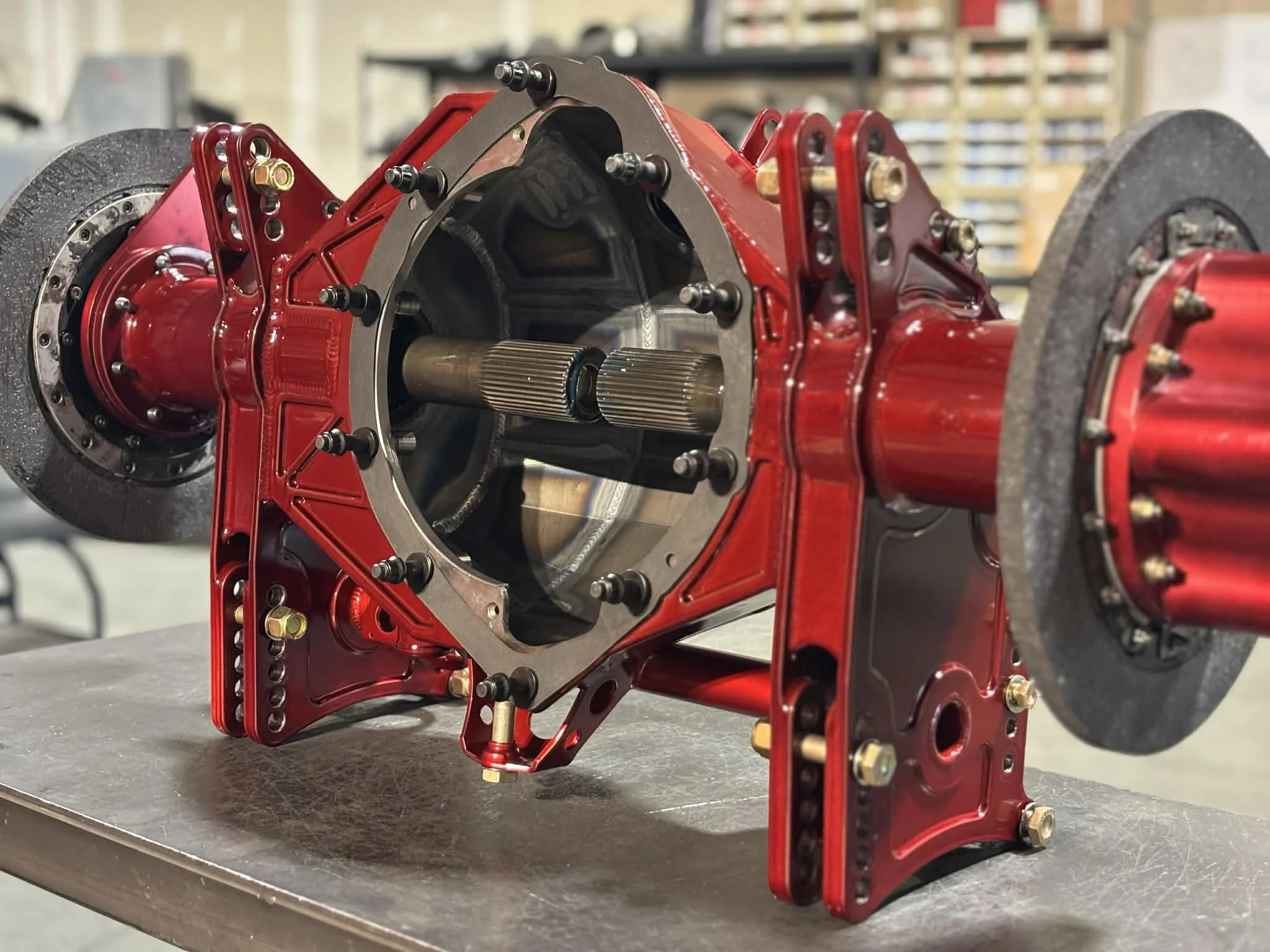
Axle tube diameter — Pro Mod applications require 3.50" axle tubes minimum. Smaller diameter tubes don't have the rigidity to handle the load without flexing under hard launches.
Faceplate thickness — The faceplate is where the gear housing bolts up. For Pro Mod you want a minimum of .375" thickness with a precision ground Blanchard finish to ensure a true, flat mating surface. Anything less and you risk gear alignment issues under load.
Billet 4-link brackets — If your car runs a 4-link suspension setup, the brackets welded to the housing are critical pickup points for the entire rear suspension. Billet machined brackets are significantly stronger and more precise than stamped or fabricated steel brackets.
Floater vs Flanged ends — A floater setup uses a separate spindle that the axle passes through, meaning if an axle breaks the wheel stays on the car. For Pro Mod this is the preferred setup — keeping a wheel attached to a car at 200+ mph is not optional.
TIG welding — MIG welding is faster and cheaper. TIG welding produces stronger, cleaner, more precise welds with better penetration — critical in a high stress application like a Pro Mod rear end housing. Every weld on an Innovative Fab housing is TIG welded by a certified welder with over 500 housing builds of experience.
Gear Setup — Ford 9" vs 11"
Most Pro Mod cars run either a Ford 9" or Ford 11" gear setup. The Ford 9" is the most common choice — it's proven, widely supported, and has a massive aftermarket parts ecosystem. The Ford 11" offers a larger ring gear diameter for additional strength at extreme horsepower levels.
At Innovative Fab our Xtreme Drive Pro Series supports both Ford 9" and Ford 11" gear setups. For customers running an 11" gear we also offer 9" adapter pieces, giving you flexibility if your setup changes down the road.
Custom Specs — Every Pro Mod Build is Different
No two Pro Mod cars are exactly alike, which means no two rear end housings should be either. When speccing a custom housing for your build you'll need to know your wheel to wheel dimension, flange to flange dimension, which housing ends you want, your 4-link bracket configuration, and what gear setup you're running. A good fabricator will walk you through all of this before they start — if they don't ask these questions, that's a red flag.
The Innovative Fab Xtreme Drive Pro Series
Our Xtreme Drive Pro Series Floater Housing was designed by Craig Sheffield with over 20 years of racing industry experience specifically to address the shortcomings he had seen in other housings throughout his career. Every detail — the 3.50" chromoly axle tubes, the .375" machined faceplate, the billet 4-link brackets, the floater spindle ends — was chosen for a reason. These housings have been race-proven at national events and have withstood over 6,000 HP in competition.
Every Xtreme Drive Pro Series housing is built to your exact specs with a 2-week lead time on most orders. We ship nationwide from our shop in Lake St. Louis, MO.
Ready to Build?
If you're putting together a Pro Mod build or upgrading your current housing setup, give us a call or shoot us a text. We'll go over your specs, answer any questions, and get you a quote.
Chromoly vs Steel Rear End Housing — What's the Difference?
It All Begins Here
If you're shopping for a custom rear end housing for your drag car, one of the first questions you'll run into is whether to go with a mild steel or 4130 chromoly build. On the surface they look similar. Under load at 200 mph with 3,000 horsepower going through the drivetrain, the difference is significant. Here's what you need to know.
What is Mild Steel?
Mild steel is the most common material used in general fabrication. It's widely available, easy to weld, and relatively inexpensive. For street cars, lower horsepower bracket cars, and general fabrication work it gets the job done. Most production rear end housings from the factory are built from mild steel.
The limitations show up at the extremes. Mild steel has a tensile strength of roughly 60,000 to 80,000 PSI depending on the grade. Under repeated high stress loads — like the kind a hard launching drag car puts through the drivetrain on every single pass — mild steel can fatigue, flex, and eventually crack.
For a street car or a mild bracket racer that's rarely an issue. For a Pro Mod or high horsepower drag racing application it's a real concern.
What is 4130 Chromoly?
4130 chromoly is a chrome-molybdenum alloy steel. The "4130" refers to its SAE steel grade designation — 41 indicating the chromium-molybdenum alloy composition, and 30 indicating approximately 0.30% carbon content.
The key properties that make 4130 chromoly the preferred material for race fabrication are tensile strength and weight. 4130 chromoly has a tensile strength of approximately 95,000 PSI in its normalized state — significantly higher than mild steel. More importantly it achieves that strength at a lower density, meaning a chromoly component can be built lighter than a mild steel equivalent at the same or higher strength rating.
In drag racing, where you're trying to put as little rotating and unsprung weight as possible between the engine and the track, that weight advantage matters. A lighter housing means better weight transfer, faster elapsed times, and less stress on everything connected to it.
How They Compare Side by Side
When it comes to tensile strength, chromoly comes in around 95,000 PSI versus mild steel's 60,000 to 80,000 PSI — a meaningful advantage under extreme load. On weight, a chromoly housing built to the same strength spec as a mild steel housing will be noticeably lighter because you can use thinner wall material and smaller cross sections without sacrificing structural integrity. For cost, mild steel is cheaper raw material and faster to weld, so mild steel housings typically carry a lower price tag. For weldability, both materials weld well but chromoly requires more precise heat control — it's best TIG welded by an experienced fabricator to get the full strength benefit of the material. And for repairability, both can be repaired in the field, but chromoly requires a welder who knows the material to do it correctly.
Does It Matter for Your Build?
The honest answer is — it depends on what you're building.
For a street/strip car, a bracket racer, or anything under roughly 800 horsepower a quality mild steel housing built by a reputable fabricator will serve you well. The loads involved don't push mild steel to its limits and the cost savings can be put elsewhere in the build.
For anything in the 1,000 HP and above range — Top Sportsman, Pro Street, Pro Mod, or any serious heads-up class — chromoly is the right call. You're operating in a range where the additional strength and weight savings of chromoly directly translate to performance and reliability. At 2,500, 4,000, or 6,000 horsepower you don't want to find out where the limits of mild steel are.
The other factor is longevity. A chromoly housing built correctly will outlast a mild steel housing in a high stress application. Fewer cracks, less fatigue, longer service life between inspections. Over the lifetime of a race program that durability has real value.
Why TIG Welding Matters With Chromoly
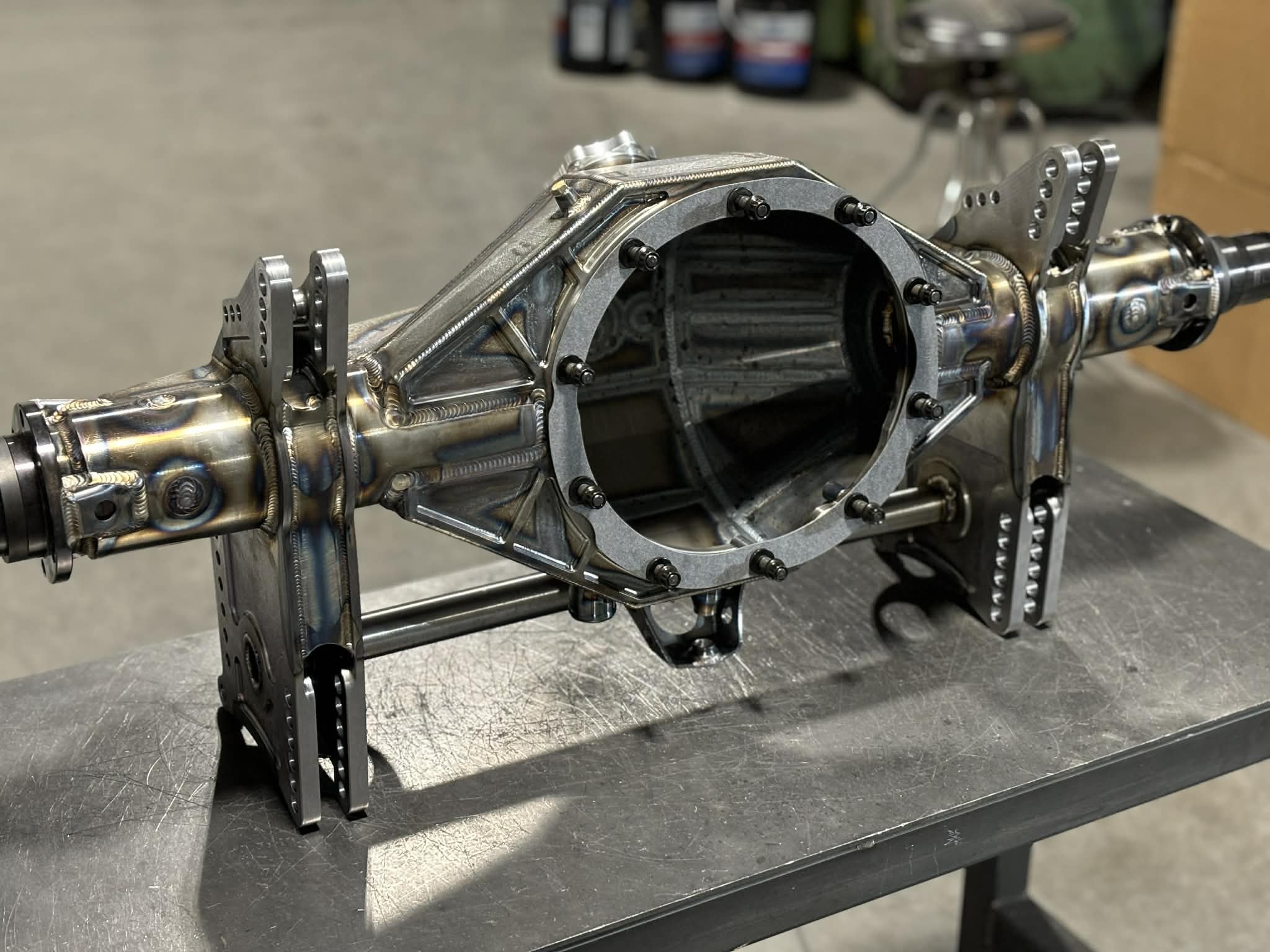
One thing worth understanding is that the material is only as strong as the welds holding it together. Chromoly's strength advantage only fully carries through if it's welded correctly. Chromoly requires controlled heat input and proper technique to avoid heat affected zone brittleness — which is why TIG welding is the standard for chromoly race fabrication rather than MIG.
A MIG welded chromoly housing isn't necessarily unsafe at lower horsepower levels, but it doesn't fully realize the material's strength potential. If you're paying for chromoly, make sure it's being TIG welded by someone who knows what they're doing.
At Innovative Fab every housing is TIG welded in-house by Tyler Koester, a certified welder who has built over 500 rear end housings since 2018. Chromoly is the only material we build with — it's what the application demands and it's what we know inside and out.
What Innovative Fab Builds
Every housing that leaves our shop — from the Sportsman Street Series starting at $1,300 to the Xtreme Drive Pro Series built for 6,000+ HP Pro Mod applications — is 100% 4130 chromoly throughout. Tubes, faceplate, structural components, all of it. We don't offer a mild steel option because we don't think it's the right material for what our customers are building.
If you're putting together a serious drag racing build and want a housing that's built to last, we'd love to talk through your specs.
Ready to Build?
Call or text us with your build details and we'll put together a quote.